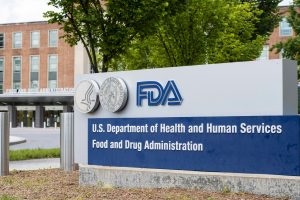

(Oregon Right to Life) — The U.S. Food and Drug Administration’s long-awaited safety review of the abortion pill mifepristone could be completed within the next three months, a new report suggests.
The Daily Signal reported Thursday that the FDA review of mifepristone might be finished as soon as September, according to a lawmaker who asked to remain anonymous.
The news comes after the agency earlier this month confirmed that its review was moving into a new data analysis phase. Last year, the Ethics and Public Policy Center (EPPC) found the severe adverse event rate for mifepristone to be more than one in ten (10.93%), twenty-two times the rate currently listed on the official FDA label. The report sparked public outcry and triggered the FDA’s announcement of a review to assess the drug’s risks, especially in light of the recent elimination of regulations prohibiting the online prescription of mifepristone and its distribution through the mail.
RELATED: FDA Confirms It’s Moving Forward with New Phase of Mifepristone Safety Review
In comments to The Daily Signal, a White House spokesperson described the ongoing FDA review as “rigorous” and high-quality.
“The Trump Administration is pursuing a rigorous review of mifepristone in response to widespread safety concerns, adhering to the highest scientific standards,” White House spokeswoman Allison Schuster told the outlet. Schuster characterized the effort as a “Gold Standard Science-based safety review led by the FDA.”
Mifepristone and its companion drug, misoprostol, have become the primary methods of abortion in the U.S., accounting for more than 63% of abortions nationwide. Mifepristone blocks the action of the growth hormone progesterone, causing the unborn embryo or fetus to die of starvation. A second drug, misoprostol, is taken to induce contractions to expel the unborn baby’s body.
The FDA has faced ongoing pressure by pro-life advocates to complete its review of the drug.
Just this week, four pro-life doctors – representing the American Association of Pro-Life OB/GYNs (AAPLOG), the Catholic Medical Association (CMA), the Christian Medical and Dental Association (CMDA), the Alliance for Hippocratic Medicine (AHM), and the American College of Pediatricians (ACPeds) – wrote to acting FDA Commissioner Kyle Diamantas, urging him to restore the in-person dispensing requirement.
RELATED: Woman Transported to Salem Hospital After ‘Medication Related’ Incident at Planned Parenthood
As Oregon Right to Life News has previously noted, federal regulations and safeguards on abortion drugs have been severely eroded over the past decade. In 2016, the FDA expanded the timeframe in which mifepristone could be prescribed during pregnancy and removed the requirement to report known complications that do not result in death. In 2021 and 2023, the FDA revised the Risk Evaluation and Mitigation Strategy (REMS) for mifepristone, permitting the online prescription of the drug and its distribution through the mail. Local pharmacies were then authorized to dispense the drug, and that permission was extended to retail pharmacies, including Walgreens and CVS.
In addition to their intended lethality for the unborn, the ready availability of abortion drugs, thanks in large part to the rollback of federal regulations, poses serious risks of adverse events and undercuts state laws intended to protect unborn lives.
Without a required ultrasound, women and girls may be incorrectly prescribed abortion pills even if they have a later or ectopic pregnancy, placing them at risk of serious side effects and even death. Online prescription and distribution through the mail also increase the potential for bad actors to obtain the pills to effectuate forced abortions. In addition, mail-order abortion circumvents state laws that ban or limit abortion, conflicting with the U.S. Supreme Court’s ruling in Dobbs v. Jackson (2022) that returned the “right to regulate abortion” to the people and their elected representatives.
While it remains to be seen what the FDA review will conclude, pro-life advocates are hopeful that it will at least lead to the restoration of the FDA’s prior ban on mail-order abortion.