
(Oregon Right to Life) — To most effectively advocate for the unborn in Oregon, pro-life advocates need a comprehensive understanding of how ordinary Oregonians think about abortion. How important do most people think life issues are politically? What legal protections would people support for unborn babies? How do most people feel about the use of taxpayer dollars to fund abortions?
There’s a simple way to find out the answers: ask Oregonians directly.
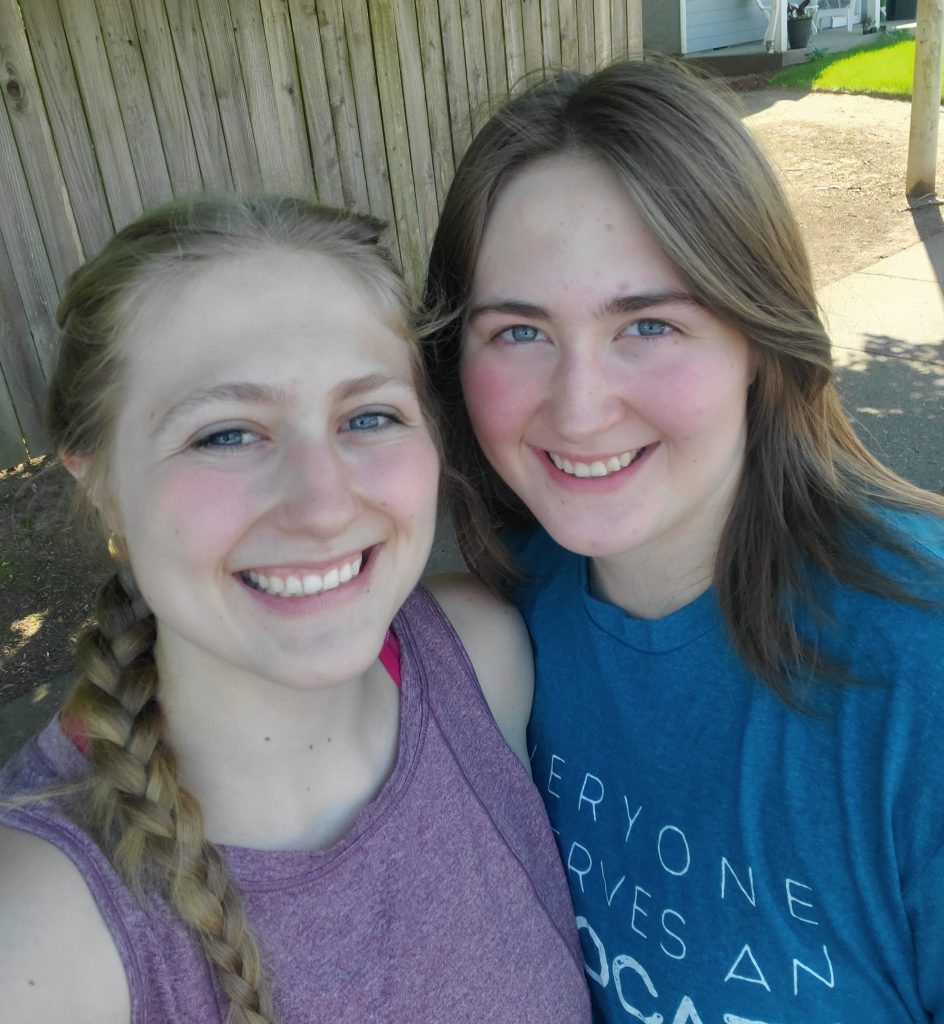
That’s what Natalie (20) and Felicia (18) Guptill do as canvassers for Oregon Right to Life PAC. The sisters – they’re among twelve children in their family, and are numbers six and seven in the birth order – have been door-knocking for Oregon Right to Life since late January. They started in Clackamas County and now operate in the Salem-Keizer area with a simple mission: Knock on doors and invite Oregonians to share their opinions on abortion via a short survey.
The questions Natalie and Felicia ask when they go door-to-door include: “How would you describe your personal position on the issue of abortion?”, “How important is the issue of abortion when determining your vote?” and other questions including whether 80% of abortions should continue to be funded by taxpayer dollars, and whether the law should protect unborn babies at the gestational age when they can feel pain. Oregon Right to Life PAC uses the data gathered by door-to-door canvassers to more effectively communicate with Oregonians during critical elections.
The most important part of Natalie and Felicia’s job is approaching each new person with kindness, openness, and a willingness to listen.
“One of my favorite parts [of being a canvasser] is definitely being able to just talk with people,” Felicia told Oregon Right to Life in a phone interview Monday. Through kind, respectful dialogue, she is able to “see what the people in Oregon believe and have that conversation with them – even though sometimes their perspective is a little bit sad.”
In the Monday phone conversation, Natalie said she loves being able to gently move people past the initial opposition they might express when first hearing she’s from Oregon Right to Life.
“They go, ‘Oh, I’m gonna stop you right there. I don’t think you’ll like what I have to say,’” Natalie said. “And I’ll usually tell them, no, we’re here to talk to everyone and listen to everyone, no matter what perspective you have.”
“By the end, we’re able to have pretty good conversations,” she explained, noting that people who may start out with unfavorable assumptions about pro-life advocates often come away realizing that, maybe, not all pro-life people are “crazy” after all, and that “they actually have reasons for this stuff…” That realization is often enough to prompt them to do further research, something Natalie said she encourages them to do.
Some people, she said, react with disbelief when they hear that abortion is legal up to birth in Oregon, even if they generally support abortion being available.
“I’ve had people before who say, ‘Prove that to me,’” Natalie said. She said she’s even done a Google search for them on the spot to show them the official Oregon policy. Some have read through the entire Oregon government webpage on abortion, “which probably is not the best for time’s sake, going quickly, but if they’re wanting to learn, I’ll take the hit for that,” she said, laughing.
“But by the end, they’re like, ‘Okay, yeah, we shouldn’t have that,’” Natalie said. “And I’d be like, yes, I know! We agree. Look at that.”
For the Guptills, who were born in rural eastern Oregon and now live in Marion County, canvassing has been a good fit for a busy season of life. The summer has been packed with travel for their family, taking them from Oregon to Idaho and Washington up to Alaska and as far east as Maryland. This fall, Natalie will transfer to a private Christian college in Nashville, Tennessee, to study music business. Felicia will begin her undergraduate degree in Communications at Grand Canyon University online next year. In the meantime, she’s teaching piano lessons and planning to launch a Turning Point USA Community Group.
With the flexibility of setting their own hours, a typical day of canvassing begins with the sisters heading out together, since “it’s more fun to have someone to do it with,” Natalie said. They begin with prayer, to “bless the encounters that we have,” and then split up, deciding on a simple strategy like taking opposite sides of the street. Then, “we knock on doors [and] we talk to people for as long as we can.”
“For the most part, we gotta just go with the flow and go with the day,” Natalie said.
Some of that variability depends on how many people answer their doors and how long people choose to engage with them if they do agree to take the survey.
“Some people like to talk more than others, obviously,” Natalie said. Interactions can range from a door quickly closed, to a participation in the survey questions without further dialogue, to a lengthy and even vulnerable conversation with a hurting person trying to grapple with their beliefs.
Felicia recounted one such conversation with an older woman who had agreed to answer the survey questions.
“At the end, she just kind of started tearing up, and she said that she had had an abortion when she was 14 years old,” she said. “Her mom had forced her to have it, and she didn’t want it. And then she started saying how it was better for her, and it’s okay, but then she started talking about how much it still hurt.” Incidentally, Felicia said, this interaction happened to be just a few days before the anniversary of the abortion – a date the woman had not forgotten after so many years.
“And she was so hurt, and so sad, and she just kept trying to reassure herself with all the stuff that pro-choice people will say, and kept saying, ‘It was better for me. I know it probably was better for me,'” Felicia recalled. That’s when she offered the woman another perspective: “I just told her… it’s okay to be hurt and to, you know, not be happy about doing it. It’s natural. You can be sad.”
By the end, the woman hugged Felicia and allowed her to pray for her. She wept, but before Felicia left, she told her she had never heard someone provide that lens through which to view her experience.
“I’ve never been able to regret it or be sad about it,” she said.
Of course, not all conversations are so vulnerable. Or so positive.
“There’s definitely been a couple times where I’ve been in a situation where I’m like, ‘Okay, I don’t feel comfortable at all,’” Felicia said. “Or somebody slams the door in your face as soon as they hear ‘Oregon Right to Life.’”
But for the most part, even the conversations that begin with some hostility directed toward them tend to resolve into relatively pleasant interactions by the end.
Natalie recounted a time when she spoke with a man who took the survey and later caught up with her again as she continued down the street.
“He was like, ‘Hey, my roommate wants to talk to you,’” she said.
A young woman came out of the house, “really angry” and confrontational. But when Natalie told her she was just working to understand how people feel about the issue, and invited her to share her opinion, the young woman began to soften. By the end, she said she’d never had a polite conversation with a pro-life person before, and thanked her for coming back and talking with her.
“It ended really nice,” Natalie said. “She seemed very receptive, and she was like, ‘I want to look more into Oregon’s laws on abortion in all of this because some of that stuff is messed up.’”
“That doesn’t happen all the time,” Natalie said. But it’s memorable when it does.
Reflecting on the opinions they hear at the door, Natalie and Felicia said they don’t think Oregon is likely to become a thoroughgoing pro-life state like Idaho or Texas. But they said it’s clear most Oregonians want at least some protections for the unborn.
“I do feel like the majority of proclaimed pro-choice people in Oregon agree a lot more with the pro-life message than the pro-choice message that’s been pushed,” Natalie said.
“I don’t know if we could convince everyone to claim to be pro-life, but I do think we could get pro-life laws in action, and that the people would generally be happy about it,” she said.
Felicia, who described the reality of abortion as “devastating,” said she hopes her conversations at the door help others learn more about the “resources that can help women instead of harming them.”
As the sisters look ahead to their future plans, their door-knocking continues for now: gathering data, asking questions, and having positive dialogues that help bring understanding, common ground, and hope to one of the most fraught ethical conversations today.
Speaking to anyone who may be interested in getting involved in the same kind of pro-life work, Felicia encouraged them to take the step.
“Get yourself out there,” she said, “make a team,” and “pray before each house” – a component that, she said, helps to make the interactions more “peaceful.”
In whatever way those conversations begin or end, “I can always feel the presence of the Lord on it,” Felicia said.
For more information about pro-life canvassing opportunities, visit ortl.org/careers or contact Political Director Sharolyn Smith at [email protected]. To support Oregon Right to Life PAC’s door-knocking efforts, go to ortlpac.org/donate.