This article discusses suicide and sexual assault. If you are struggling and need help, call or text 988 to speak with a trained counselor for free, anytime 24/7. You can also visit 988lifeline.org or call 800-273-8255.
(Oregon Right to Life) — Earlier this year, a deeply hurting young woman in her twenties was killed by legal euthanasia in Spain. The story received global attention and outcry, and is part of an alarming series of stories of young people seeking and receiving legal euthanasia because of psychological disorders.
25-year-old Noelia Castillo died by euthanasia in Barcelona, Spain on March 26, 2026. Her death came after a lengthy 20-month-long legal battle in which her father, Gerónimo Castillo, fought to save her life. Abogados Cristianos (Christian Lawyers), a Catholic legal group, represented Mr. Castillo in challenging the court’s ruling granting his daughter’s request for legal euthanasia.
In a statement, Abogados Cristianos called for “urgent changes” to protect others following Castillo’s death.
“We deeply regret her death and denounce that this case highlights the serious flaws in the euthanasia law, which does not protect the most vulnerable people,” the group said, according to TMZ. “We urge politicians to use her story to drive urgent changes and prevent something like this from happening again.”
In public comments prior to her death, Castillo said she had struggled with psychiatric illness since her teen years, and had reportedly suffered two rapes. She attempted suicide twice. The second time, in 2022, she jumped from a fifth story window and suffered serious injuries that left her paraplegic and confined to a wheelchair.
She requested legal euthanasia in 2024, three years after Spain’s 2021 legalization of both euthanasia and assisted suicide.
Under Spanish law, any adult can qualify for euthanasia if they have a “serious and incurable illness or a serious, chronic, and disabling condition” and are “capable and conscious” at the time of the application, The Guardian noted. Such an illness must be one that “causes constant and unbearable physical or mental suffering without the possibility of relief that the person considers tolerable, with a limited life expectancy, in a context of progressive frailty.”
Castillo’s father fought the courts to prevent his daughter’s death. However, in March of this year, nearly two years after Castillo applied for euthanasia, the courts ultimately ruled against her father, and she was killed by euthanasia in a Barcelona hospital according to her request.
Pro-life advocates strongly oppose euthanasia and assisted suicide, arguing that physicians and governments should be in the business of seeking thorough medical care for vulnerable people, including those with disabilities or mental illness, not prescribing death as a solution. Opponents also point out that the authorized killing – or facilitation of killing – of patients is fundamentally opposed to the dignity and sanctity of human life; that, in practice, the alleged “right to die” in a country becomes an implicit “duty to die”; and that the practices open avenues for coercion, manipulation, and abuse.
Spanish journalist Itxu Díaz called Castillo’s case a “colossal failure of the state.” Live Action argued that “[t]he sick and mentally ill deserve safety, treatment, and care. Not death,” adding: “Euthanasia must end.”
RELATED: Medical Experts Debate Ethics, Risks of Legal Assisted Suicide
While similar, euthanasia and assisted suicide are distinct terms.
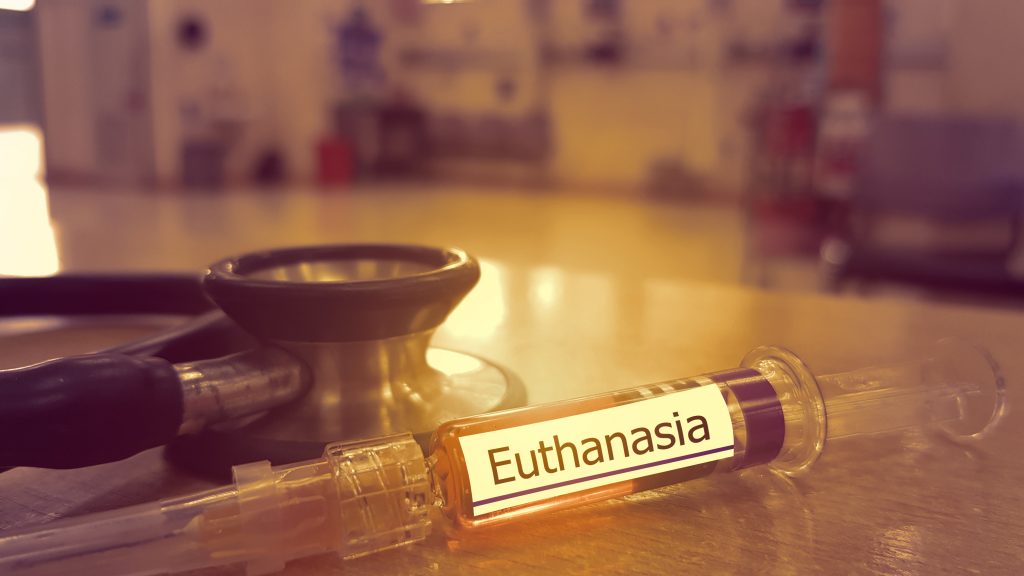
Euthanasia refers to the legalized killing of a person by a physician who administers a lethal drug. Countries with legal euthanasia include Canada, Belgium, Spain, Australia, and New Zealand, The practice is illegal in the U.S. Assisted suicide differs in that the lethal drug, while legally prescribed by a physician, is self-administered by the patient. Assisted suicide is legal in countries including Germany, Switzerland, and the Netherlands, where 28-year-old Zoraya ter Beek made headlines in 2024 for getting approved for assisted suicide despite not suffering from any physical ailments. Assisted suicide is also legal in 13 U.S. states, including Oregon and Washington.
Since Spain legalized euthanasia and assisted suicide in 2021, 1,123 people have died by euthanasia – including a 22 year old and a 23 year old.
Noelia Castillo’s heartbreaking story serve as an extreme example of what assisted suicide and euthanasia laws can look like in practice, strengthening warnings by pro-life advocates against the expansion of existing assisted suicide laws like those in the United States. An effort to expand Oregon’s assisted suicide law was defeated in the state legislature in 2025 after vehement pushback from lawmakers, medical doctors, Oregon voters, and organizations including Patients Rights Action Fund and Oregon Right to Life.