
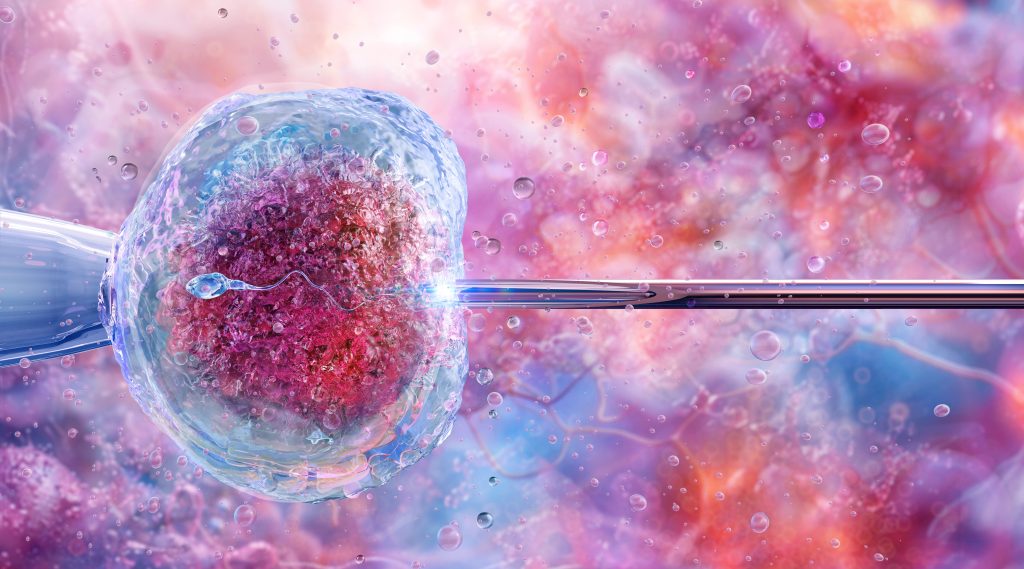
(Oregon Right to Life) — Oregon’s U.S. Democratic senators this week joined a push for federal legislation to create a “right” to in-vitro fertilization (IVF). IVF and similar technologies involve serious ethical issues, sparking opposition from pro-life advocates who recommend other, life-affirming remedies for infertility.
Oregon Senators Ron Wyden and Jeff Merkley, both Democrats, announced Tuesday they were joining other congressional Democrats in support of the “Right to IVF Act.” The bill would force insurance plans nationwide to cover IVF, a form of assisted reproductive technology in which a human egg is fertilized in a laboratory. The procedure typically costs tens of thousands of dollars, and most states – including Oregon – do not mandate that health insurance cover it.
“Deciding when and how to start a family is deeply personal, and Americans deserve access to the full spectrum of quality health care to make those critical decisions,” Senator Wyden said in a July 28 statement.
Senator Merkley similarly argued that “IVF should be accessible and affordable to all,” calling it “critical care for folks wanting to start or expand their family.”
In their statement, Wyden and Merkley said the bill “comes nearly two years after Donald Trump promised free IVF for all Americans,” which they called a “broken promise” that has been followed by “continued attacks on reproductive freedom [sic].”
President Trump’s pledge to expand IVF access was met with strong opposition from pro-life advocates at the time, triggering confusion among some who did not understand why people who oppose abortion should also oppose methods ostensibly designed to help couples conceive.
But pro-life advocates and religious leaders have made clear that there are serious ethical concerns surrounding IVF – namely the commodification of human life, the freezing or destruction of babies in their embryonic stage, and the routine “selective reductions” (abortions) of undesired embryos after they’ve been implanted. In the U.S., it’s estimated that over a million human embryos are currently frozen in long-term storage after having been created through IVF.
READ: What’s The Deal With IVF?
U.S. Catholic bishops including Portland Archbishop Alexander Sample spoke out strongly against a similar effort earlier this year to compel insurance companies to cover IVF. The bishops argued that IVF “represents a relatively unregulated industry that creates hundreds of thousands or even millions of preborn children who will be interminably frozen, expended in attempts to place them within a mother, or discarded and killed (often in a selective, eugenic manner).”
“In addition to such mass death, IVF poses health risks to both women and the children who are born as a result of it,” the bishops’ letter stated. “IVF also commodifies human beings, including children and, in many cases, donors or surrogates. This, furthermore, disregards the right of children to be conceived naturally, free from technological manipulation, by their own married mother and father.”
Father Tad Pacholczyk, senior ethicist at the National Catholic Bioethics Center (NCBC) and a keynote speaker at Oregon Right to Life’s 2026 Together We Advocate conference, also recently denounced efforts to expand access to IVF from the federal level. He noted that, while IVF is sometimes regarded as a “a pro-life, pro-family technology… at its core, it’s not.”
While he gave credit to the president for “seeing the importance of family formation,” he pointed out that “there are a number of concerns that arise in the wake of this technology.”
And it isn’t only Catholic leaders who are expressing concerns about IVF.
In 2024, the Southern Baptist Convention (SBC), the largest Protestant denomination in the U.S., published a resolution urging “the government to restrain actions inconsistent with the dignity and value of every human being, which necessarily includes frozen embryonic human beings.” The SBC also encouraged its members to “consider the ethical implications of assisted reproductive technologies as they look to God for hope, grace, and wisdom amid suffering.”
In denouncing the unethical aspects of IVF, pro-life advocates simultaneously recognize the practice’s appeal for parents suffering infertility. But instead of advocating for a procedure that involves the commodification and destruction of human beings, pro-life advocates point couples to life-affirming alternatives. One such option is found within the field of restorative reproductive medicine (RRM), which seeks to identify and treat underlying reasons for infertility.
Oregon Right to Life, though holding a position against the creation of human life through artificial reproductive technologies like IVF, also fully affirms the inherent value and dignity of all human beings, advocating for their protection regardless of the circumstances of their conception.